Educating Bartenders Worldwide.
By Beverage Trade Network
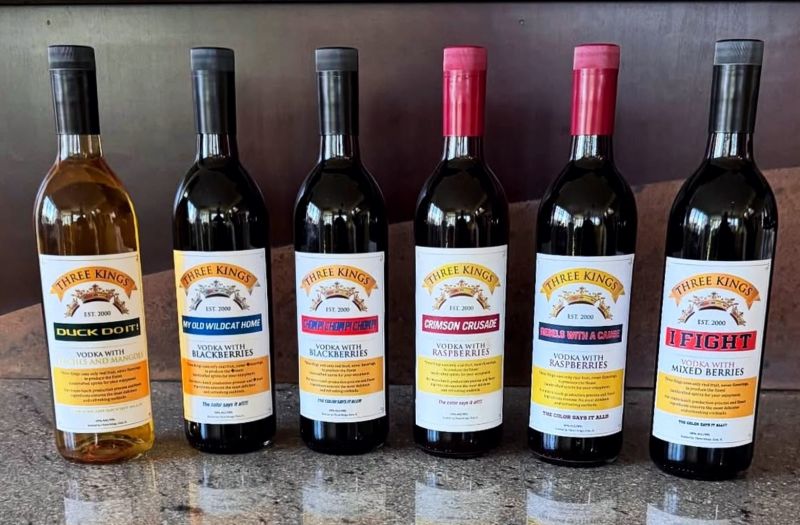
Walk into almost any back bar in the country and the flavored vodka shelves feature a row of brightly labeled bottles, each promising something fruity, each delivering something chemical. For bar managers and mixologists who have watched curious customers take one sip and quietly push the glass away, this has been the quiet frustration of the category for decades. And now with the rise of the new and younger consumer looking for nothing but authenticity in the beverage they pick, moving these artificially flavoured vodkas off the shelf has became more difficult than before. If this is a problem you face more often than not, Three Kings Vodka was built to solve exactly this issue.
Flavored vodka as a category has been coasting on shortcuts since it went mainstream. Artificial essences and synthesized flavor compounds keep costs low and production fast, but they also produce that unmistakable artificial aftertaste (the one that tastes like what a raspberry is supposed to smell like, rather than what a raspberry actually tastes like). Consumers have grown increasingly attuned to the difference, and so have the bartenders serving them.
On the flip side, Three Kings takes a fundamentally different approach by infusing the liquid with real fruit. Raspberries, mixed berries, mango, peach, jalapeño — each expression is produced by soaking actual fruit in Canadian wheat grain vodka, filtered through a multi-stage process that removes all sediment while preserving pure, clean fruit flavor. The result is so distinct that the government's own labeling standards drew the line for them: these are not raspberry-flavored vodkas, they are vodkas with raspberries. That distinction, initially a regulatory technicality, has become one of the brand's sharpest marketing assets — and for on-trade operators, it is a genuine conversation starter.
For bartenders and mixologists, the practical upside is significant. A spirit that tastes authentically of its fruit rather than approximating it, opens the door to a different kind of cocktail creativity. The flavor profile is clean and versatile rather than synthetic and one-note.
Take for instance the Berry Bonanza expression — a mixed berry vodka with enough depth and robustness to substitute for Pisco in a sour. The result, what the brand calls the Bonanza Sour, delivers the egg-white structure and citrus brightness of the classic but layered with genuine berry character. It is the kind of unexpected riff that earns a second order and a question from the guest. Similarly, the Razzle Dazzle Berry raspberry expression makes an outstanding base for a chocolate raspberry riff on the White Russian — raspberry vodka, Kahlúa, half and half, and a half-teaspoon of chocolate syrup. Chocolate and raspberry is a flavor pairing that requires no explanation to a guest. It lands immediately, and it sells itself.
The Sweetie Heetie expression — mango and jalapeño — offers particular opportunity for bartenders who lean into spice-forward builds, and it pairs exceptionally well with fresh lemon-lime sodas for a high-low summer serve that is both accessible and memorable.
At 38% ABV, Three Kings sits just below the standard 40%, which translates to a noticeably softer, fruit-forward entry that makes it unusual among full-strength vodkas. Guests consistently register surprise at the ABV. They often expect something lighter, based on how it drinks. For on-trade operators, this means the product works in a wide range of serves: cocktails, certainly, but also neat on ice for guests who want something more considered than a standard spirit pour.
The repeat customer for Three Kings is not chasing a deal. They are part of a growing segment of cocktail-literate, quality-conscious drinkers who read ingredient labels, gravitate toward natural products, and are willing to pay a premium when the quality justifies it. This is the same consumer driving growth in craft beer, natural wine, and artisan food. They want to know what is in their glass, and they want it to taste like it came from something real.
For bar managers and restaurant operators, stocking a product that speaks to this consumer is increasingly a floor requirement rather than a bonus. The cocktail menu that features a mango jalapeño margarita built on a vodka that actually tastes of mango and jalapeño is not just a drink, but a differentiator.
Flavored vodka has been one of the most stagnant segments in spirits precisely because producers have treated it as a commodity. Three Kings treats it as a craft category. One where no shortcuts are taken, production is painstaking, and the fruit does the work. For on-trade accounts looking to build a back bar that reflects where the market is going, this is a compelling proposition.
Header image sourced from Three Kings Vodka (Instagram).